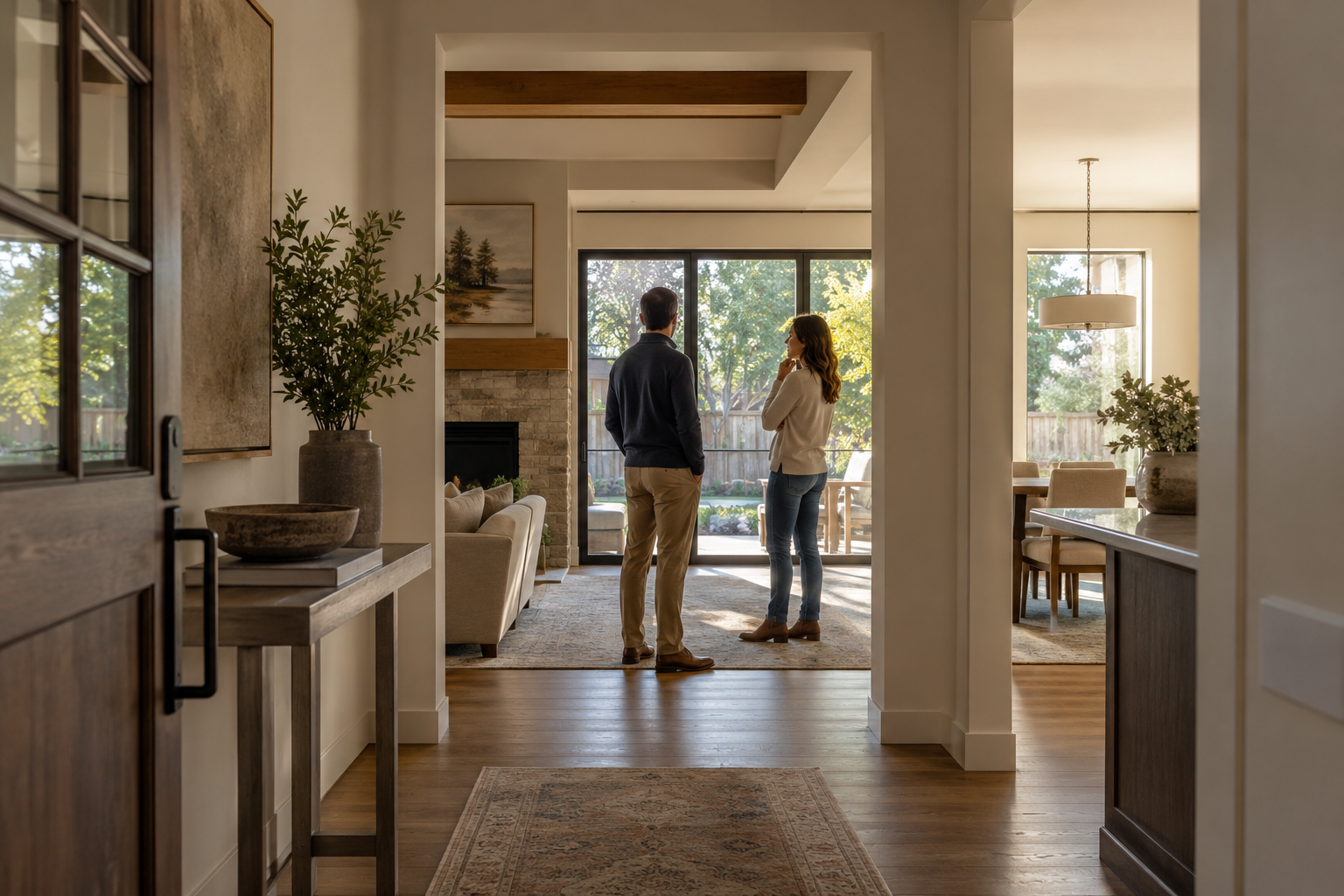
You walk into a house and something clicks.
Maybe it’s the kitchen. Maybe it’s the backyard. The light is right. The neighborhood feels comfortable. You can picture where the furniture would go. Someone has already claimed a bedroom.
Ten minutes ago, you were evaluating a property.
Now you’re imagining your life there.
And almost without noticing, the question changes.
Instead of asking, Is this the right house? the conversation starts becoming, What do we need to do to get it?
There is nothing wrong with that reaction.
Homes are personal. They should create emotion. After more than two decades in real estate, I would be far more surprised by buyers who felt nothing than by buyers who occasionally fell in love with a house.
The problem isn’t emotion.
The problem is asking emotion to build the strategy after the decision is already underway.
Decide What Matters Before the House Does
Most buyers begin their home search with some version of a list.
Bedrooms. Bathrooms. Location. Price. Schools. Commute. Condition.
That’s useful. But a list of preferences isn’t a decision framework.
The more important work is understanding why those things matter — and which of them should survive when they inevitably begin competing with one another.
Suppose the better location means a smaller house. The larger lot means a longer commute. The remodeled property stretches the budget. The house in the preferred school district needs significant work.
Now the search becomes a decision.
And if buyers haven’t thought through those tradeoffs beforehand, the property in front of them can begin establishing the priorities for them.
That’s backwards.
A stronger buying strategy starts by understanding what the move is supposed to accomplish.
What needs to become better as a result of buying this home? What matters enough to pay for? Where is compromise reasonable — and where would compromise eventually become regret?
Those questions are much easier to answer before you’re standing in a kitchen you love.
Falling in Love Isn’t the Problem
I don’t believe buyers should try to remove emotion from buying a home.
That’s neither realistic nor desirable.
A home isn’t just a collection of specifications. It’s where ordinary life happens. People should care about how it feels.
But emotion works best when it has something solid around it.
Because once we really want something, we’re remarkably good at finding reasons why the things that concerned us yesterday aren’t quite as important today.
The budget becomes a little more flexible. The commute doesn’t seem that bad. The inspection issue is probably manageable. The street is busier than we wanted, but maybe we’ll get used to it.
This isn’t foolishness. It’s human behavior.
Enthusiasm changes how we evaluate information.
That is precisely why the work done before finding the house matters. A buyer should be able to say:
I love this property.
And still ask:
Does this home still serve the reason we started looking?
Those ideas don’t conflict. In fact, holding both at the same time is one of the clearest signs of a thoughtful buying process.
The Move of a Lifetime
A few years ago, I worked with a buyer who saw something appear on the market that most people never get the chance to see — the home they grew up in.
It had been in another family’s hands for years. Now it was available.
The emotion was immediate and completely understandable. This wasn’t just a property. It was a chapter of someone’s life that had unexpectedly reopened.
And it set everything else in motion.
The problem wasn’t the goal. Getting that home would have been remarkable. The problem was that the urgency the house created — the fear of losing it — began driving the strategy.
To buy it, they needed to sell their current home first. And their current home was going to require a very specific buyer. Unusual attributes. A longer timeline. Exactly the conditions that don’t respond well to pressure.
I presented an alternative: securing temporary funds from family or another source that would allow them to close on the childhood home without a sale contingency. Move in. Then take the time to properly position and sell their current property without the emotional weight of another purchase depending on it.
It wasn’t without risk. But it gave us a far higher probability of completing what I had started calling the move of a lifetime. I was direct about that. Rushing a difficult property to market against a ticking clock gave us far less control.
They chose a different path.
The rush to market created exactly the pressure I had hoped to avoid. The house sat. The childhood home sold to someone else.
Years later, they eventually sold their property.
The childhood home was long gone.
The goal had been right. The plan hadn’t kept pace with it.
Finding Homes Has Become Easier. Deciding Hasn’t.
There was a time when access to property information was a significant part of a real estate professional’s value.
That world has changed.
Today, buyers can see new listings almost immediately. They can study photographs, price histories, neighborhood data, school ratings, and comparable sales before ever speaking with an advisor.
That’s a good thing.
Property discovery has largely been democratized.
Decision discipline hasn’t.
Being able to see more homes doesn’t make it easier to recognize the right one. More information and more choices can make the decision harder. Buyers can keep expanding the map, adjusting the price range, comparing the house they’re standing in with one that sold six months ago and another that might theoretically appear next week.
The search can become almost infinite.
But eventually someone has to make a decision.
That is where experienced advisory has become more important, not less.
The value isn’t simply knowing which homes are available. It’s asking better questions about the ones that deserve serious consideration.
Why this property? What are we giving up? What happens if we don’t buy it? Does it still make sense when the excitement settles down?
Better questions don’t guarantee a perfect outcome.
They improve the quality of the decision.
The Goal Is a Decision You Can Stand Behind
No buying strategy can remove uncertainty.
You won’t know whether a house you might like even more will appear next week. You won’t know exactly what the market will do over the next five years. You can’t know every way your life might change after you move in.
Waiting for certainty can therefore become its own decision — often one that leaves buyers perpetually searching for information that doesn’t exist.
Confidence is different from certainty.
Confidence means understanding why you’re making the decision. It means recognizing the meaningful tradeoffs rather than discovering them afterward. It means evaluating the risks that can be evaluated, acknowledging the uncertainty that can’t be eliminated, and deciding whether the opportunity still makes sense.
Sometimes that process leads to an offer. Sometimes it leads to walking away.
Both can be the right outcome.
Because the objective of a thoughtful home search isn’t simply to acquire a property. It’s to reach the other side of the decision able to say:
We understood what mattered, what we were giving up, and what we were taking on. And based on what we knew, this was the right decision for us.
The house can still make you fall in love.
It just shouldn’t be the thing making the decision.
The buyers who navigate this well aren’t the ones who feel less. They’re the ones who had the right conversation before they walked through the door.
If you’re considering buying a home in the Placer County or greater Sacramento area and want someone in your corner who will ask the right questions before the house starts changing the answers — that conversation starts here.
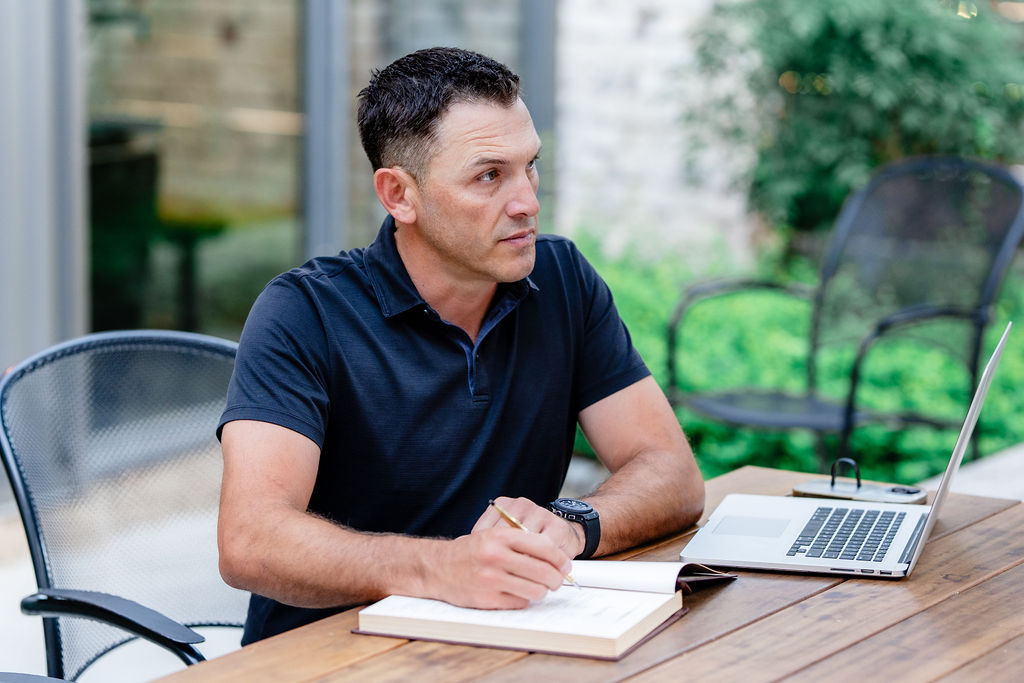
Jon Hesse is the founder of Accelerated Realty Group, a strategic real estate advisory serving Placer, Sacramento, and El Dorado counties.
With more than 20 years of experience and hundreds of transactions completed — including some of the most complex contingent sales in the region — he specializes in helping individuals and families navigate significant real estate decisions with clarity, strategy, and confidence. DRE
License #01459355.